Source Motorcycle Clutch Plate for CG125, Bajaj, and Future Models
Find 27 verified motorcycle clutch plate options for models like CG125, Bajaj CT100, and Future. Compare specifications, pricing, and supplier details for steel friction plates with ISO9001 certification and custom packaging.
Key considerations
Products List


Comprehensive Sourcing Guide
Strategic Sourcing Guide for Motorcycle Clutch Plates
Understanding Technical Specifications and Compatibility
When sourcing a motorcycle clutch plate, the primary technical challenge lies in ensuring precise compatibility with the target engine model. The market for these components is highly fragmented, with specific designs tailored to distinct engine architectures. Buyers must verify the exact model number of the motorcycle, as the physical dimensions, friction surface area, and splined hub diameter vary significantly between manufacturers. For instance, specific listings indicate compatibility with models such as the CG125, C50, EX5, C70, BEAT, and Bajaj CT100. Each of these models requires a clutch plate engineered to match its specific torque transmission requirements and housing constraints.
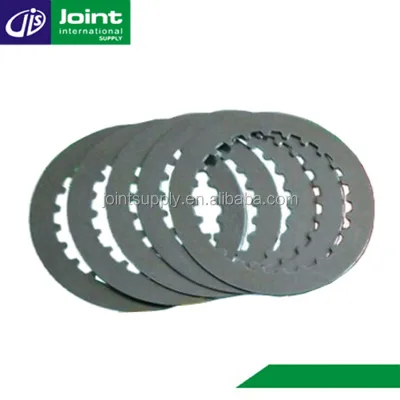
The material composition is another critical technical specification. The supplied data identifies steel as a primary material for the core structure of these clutch plates. This steel construction provides the necessary durability and heat resistance required for high-performance applications. However, the friction material applied to the steel plate is equally vital for operation. While the core is steel, the friction surface must offer the correct coefficient of friction to ensure smooth engagement and disengagement without excessive slip or harsh grabbing. Buyers should request detailed material data sheets that specify the friction material type, as this directly influences the clutch's lifespan and the rider's experience.
Furthermore, the manufacturing standard plays a pivotal role in performance. Some suppliers adhere to specific standards such as "125cc" specifications or general "Various models'specification" protocols. It is essential to confirm that the product standard matches the engine displacement and power output of the motorcycle in question. A clutch plate designed for a 125cc engine may not perform adequately on a larger displacement bike, nor will a plate designed for a specific brand's proprietary system fit a generic chassis. The model number, such as M20600021 or FUTURE, serves as a unique identifier that buyers must cross-reference against their inventory or customer requirements to avoid fitment errors.
Compliance, Certification, and Quality Assurance
In the B2B procurement of automotive components, verifying compliance and certification is non-negotiable. The supplied information highlights that certain suppliers hold ISO9001 certification specifically for the type of product: Motorcycle Clutch. This certification indicates that the manufacturing process adheres to international quality management standards, ensuring consistency in production. However, buyers must not assume that every listed product carries this certification; it must be verified on a per-supplier basis. The presence of ISO9001 is a strong indicator of a supplier's commitment to systematic quality control, but it does not automatically guarantee the performance of a specific batch without further testing.
Quality control protocols are equally important. The data indicates that some manufacturers perform "100% Tested Before Shipping." This is a robust quality assurance measure that significantly reduces the risk of receiving defective units. Buyers should explicitly ask suppliers to confirm their testing procedures. Does the testing involve visual inspection, dimensional verification, or functional load testing? A claim of "High Performance" or "High Quality Performance" is an attribute that requires substantiation. Without independent test data or third-party validation, such claims remain observations rather than verified facts.
Additionally, the concept of "a Class" quality suggests a tiered grading system where products are categorized by their adherence to performance benchmarks. Buyers should inquire about the specific criteria used to define this class. Is it based on tensile strength, friction retention, or wear resistance? Understanding these metrics allows for a more informed comparison between different suppliers. The absence of specific numerical standards in the general listing means that buyers must establish their own acceptance criteria or request that the supplier aligns with recognized industry benchmarks for motorcycle clutch plates.
Cost Drivers and Pricing Structures
The pricing of motorcycle clutch plates is influenced by a complex interplay of factors, including material costs, manufacturing complexity, order volume, and logistics. The observed price range in the market spans from $0.15 to $14.50 USD. This wide variance suggests that the final cost is heavily dependent on the specific model, the quality of materials used, and the customization level required. Lower-priced items may correspond to standard, high-volume models like the CG125, while higher prices could reflect specialized designs, custom branding, or lower production runs.
Order volume is a primary driver of unit cost. The Minimum Order Quantity (MOQ) varies significantly across the market, ranging from as low as 50 pieces to as high as 10,000 pieces. Some suppliers list an MOQ of 300 pieces, while others accept small orders of just 50 units. This flexibility allows buyers to manage cash flow and inventory risk, but it also impacts the per-unit price. Typically, higher volumes secure better pricing, but the specific threshold varies by supplier. Buyers must calculate the total landed cost, which includes the unit price, shipping fees, and any potential tariffs, rather than focusing solely on the listed price.
Customization is another significant cost factor. The availability of OEM (Original Equipment Manufacturer) services and customization options implies that buyers can request specific branding, packaging, or even slight design modifications. These services often incur additional setup costs or higher per-unit prices compared to standard off-the-shelf products. The supply ability, noted as 10,000 pieces per month for certain suppliers, indicates that large-scale orders can be fulfilled without significant delays, but the cost structure for such volumes needs to be negotiated separately from standard retail pricing.
Typical Applications and Market Segmentation
Motorcycle clutch plates are essential components for a wide array of two-wheeled vehicles, ranging from commuter bikes to performance motorcycles. The specific models identified in the data, such as the CG125, Bajaj CT100, and BEAT, point to a strong focus on the commuter and utility motorcycle segment. These vehicles are prevalent in markets where reliability and cost-effectiveness are paramount. The clutch plate must withstand frequent engagement and disengagement in stop-and-go traffic, making durability a key requirement.
The market also includes applications for larger displacement or specific brand models like the EX5 and C70. These applications may require clutch plates with different friction characteristics to handle higher torque outputs. The versatility of the product line, covering models from 125cc to potentially larger capacities, suggests that suppliers catering to this niche must maintain a diverse inventory. Buyers targeting specific regional markets should align their procurement strategy with the dominant motorcycle models in those regions. For example, sourcing for the South Asian market might prioritize CG125 and Bajaj variants, while other regions might require different specifications.
Furthermore, the "High Performance" attribute suggests that these components are also suitable for riders seeking enhanced durability or slightly improved engagement characteristics compared to stock parts. This creates a secondary market for aftermarket upgrades, where buyers may be willing to pay a premium for components that promise longer life or better feel. Understanding the end-user's needs is crucial; a fleet manager for a delivery service has different requirements than an individual enthusiast looking to upgrade their bike.
Supplier Evaluation and Operational Capabilities
Evaluating a supplier for motorcycle clutch plates requires a holistic assessment of their operational capabilities, logistics, and financial terms. The location of production is a key factor; the data indicates origins in Zhejiang and Chongqing, China. These regions are known for their manufacturing clusters, but buyers should verify the specific factory capabilities rather than relying solely on the province. The port of dispatch is listed as NINGBO, which is a major shipping hub, facilitating efficient export logistics. However, buyers should confirm if this is the primary port or if alternative options are available to optimize shipping routes to their destination.
Lead times and delivery reliability are critical for supply chain planning. The observed delivery times range from 7 days for detailed orders to 30-35 working days for standard production. This discrepancy highlights the importance of clarifying the production status of the order. Is the item in stock, or is it a custom run? A 7-day delivery suggests immediate availability, whereas a 30-day lead time indicates a manufacturing cycle. Buyers must align their inventory planning with these timelines to avoid stockouts. The supply ability of 10,000 pieces per month provides a baseline for capacity, but buyers should verify if this capacity is consistent or subject to seasonal fluctuations.
Payment terms also play a significant role in supplier evaluation. Common terms include T/T (Telegraphic Transfer), L/C (Letter of Credit), Western Union, and PayPal. Some suppliers require a 30% deposit with the 70% balance paid before shipment. These terms reflect the risk profile of the transaction. For new buyers, starting with smaller orders and using secure payment methods like L/C or escrow services can mitigate financial risk. Additionally, the availability of samples is a valuable indicator of a supplier's confidence in their product. Buyers should utilize sample offers to physically inspect the quality, packaging, and fitment before committing to a larger order.
Long-Term Procurement and Quality Control Strategies
Sourcing motorcycle clutch plates is not a one-time transaction but a long-term relationship that requires ongoing quality management. The warranty period, observed as 3 months in some listings, provides a baseline for supplier accountability. However, buyers should negotiate warranty terms that reflect the actual expected lifespan of the component. A 3-month warranty may be sufficient for low-volume testing but insufficient for long-term fleet operations. Establishing a clear defect rate threshold and a process for handling returns or replacements is essential for maintaining operational continuity.
Quality control should be integrated into the procurement process at multiple stages. While "100% Tested Before Shipping" is a strong claim, buyers should consider implementing their own incoming quality control (IQC) checks. This might involve random sampling to verify dimensions, material hardness, and friction performance. The packaging details, such as white bags, carton boxes, or Kraft paper cartons, also impact the condition of the product upon arrival. Ensuring that the packaging is robust enough to prevent damage during transit is a key consideration, especially for international shipments.
Finally, the ability to customize packaging and branding (OEM) allows buyers to build a distinct market presence. Whether using "Lpi Brand" packaging or custom designs, the packaging must protect the product while conveying the brand's value proposition. As the market evolves, buyers should maintain open communication with suppliers regarding new models and technological advancements. The flexibility to adapt to changing specifications, such as the shift from "Various models'specification" to more standardized requirements, will ensure that the supply chain remains resilient and responsive to market demands. By focusing on these strategic elements, buyers can secure a reliable supply of high-quality motorcycle clutch plates that meet their specific operational needs.
FAQs
What materials are used for motorcycle clutch plates?
The core structure of these clutch plates is made of steel to ensure durability and heat resistance. While the base is steel, the friction surface requires specific material properties for smooth engagement, so buyers should request detailed material data sheets for the friction layer.
Which motorcycle models are compatible with these clutch plates?
These plates are designed for specific models including CG125, C50, EX5, C70, BEAT, and Bajaj CT100. Each model requires a unique design to match its engine architecture, so verifying the exact model number is essential to avoid fitment errors.
Can I get samples before placing a large order?
Yes, suppliers offer samples to allow buyers to inspect quality and fitment before committing to bulk purchases. This option helps verify the product against specific requirements and ensures the component meets the expected performance standards for your application.
What is the typical lead time for delivery?
Delivery times vary from 7 days for detailed orders to 30-35 working days for standard production runs. The specific timeline depends on whether the item is in stock or requires a custom manufacturing cycle, so clarify the production status before ordering.
Which certifications do the manufacturers hold?
Some suppliers hold ISO9001 certification specifically for motorcycle clutch manufacturing to ensure consistent quality management. Buyers must verify this certification on a per-supplier basis as it indicates adherence to international standards but does not guarantee every batch without further testing.
How does the minimum order quantity affect pricing?
The minimum order quantity ranges from 50 to 10,000 pieces, directly influencing the unit cost and cash flow requirements. Higher volumes typically secure better pricing, but the specific threshold varies by supplier, so calculate the total landed cost including shipping fees.
What payment terms are accepted for these orders?
Common payment methods include T/T, L/C, Western Union, and PayPal, with some requiring a 30% deposit. The balance is often paid before shipment, so new buyers should consider using secure payment methods like L/C to mitigate financial risk during the transaction.